
US Constitution.co
Articles by Javier Ruiz
Ninth Amendment & Right to Die
The Anti-Federalists worried about Americans losing their rights, while Federalists favored a strong national government. James Madison, as a peacemaker, drafted the Bill of Rights. Recognizing the list of rights was incomplete, he included the Ninth Amendment as a safety net for unenumerated...
Read more →
Wealth Tax Constitutionality
Taxation in the United States sparks debate. The Founding Fathers decided early on there should be rules about how taxation works. The debate was over direct versus indirect taxes. Direct taxes included property and head taxes, which had to be shared among states based on population. Indirect taxes...
Read more →
Tenth Amendment & Healthcare Control
The Tenth Amendment emerged after the Constitutional Convention to emphasize that powers not explicitly granted to the federal government belong to the states or the people. This amendment still influences the balance of power between federal and state governments, particularly in healthcare. The...
Read more →Eighth Amendment Bail Reform
The Eighth Amendment stems from the English Bill of Rights of 1689. The Colonists brought over the idea that punishment shouldn't be 'cruel and unusual.' At the Constitutional Convention, the founding fathers debated to create an amendment protecting citizens from excessive bail, unwarranted fines,...
Read more →
Sixth Amendment in High-Profile Trials
The Sixth Amendment sets out crucial rights for defendants in criminal trials. It guarantees the right to a speedy and public trial, which can be complicated in high-profile cases. The mix of media attention and public interest can make maintaining an impartial jury challenging. The amendment tries...
Read more →
Fifth Amendment & Immunity Deals
The Fifth Amendment protects against self-incrimination, allowing individuals to refuse testifying against themselves in criminal cases. This protection extends to civil cases as well, though judges may draw negative inferences from silence in civil proceedings. To compel testimony, the government...
Read more →Fourth Amendment and Exclusionary Rule
The Fourth Amendment stems from the Founders' opposition to British search practices. It required warrants supported by probable cause before law enforcement could search personal property. Key developments in Fourth Amendment jurisprudence include: Weeks v. United States (1914): Introduced the...
Read more →
2nd Amendment and Concealed Carry
The Supreme Court struck down New York's century-old concealed carry law in a 6-3 decision . Justice Clarence Thomas declared the right to bear arms in public as fundamental as free speech or religious practice. The ruling rejected the previous two-step test for evaluating gun laws, instead...
Read more →
First Amendment and Student Free Speech
Campus speech issues are spreading across American universities. A recent survey found that 55% of students find it difficult to discuss the Israeli-Palestinian conflict on campus , the highest percentage ever recorded for any issue. This reflects growing tensions around controversial topics on...
Read more →
22nd Amendment's Impact on Campaigns
Franklin D. Roosevelt's presidency reshaped America's executive branch. Elected four times, his tenure ignited debates about executive overreach. Roosevelt took office during the Great Depression in 1932 and led the country through World War II, making his leadership crucial in turbulent times. His...
Read more →
17th Amendment and Senate Term Limits
The U.S. Constitution originally assigned state legislatures to elect senators. By the early 1900s, this method showed flaws. Deadlocks in state elections became frequent. Delaware notably struggled, taking 217 ballots over 114 days in 1895 and failing to elect a senator. Calls for popular votes...
Read more →Fourth Amendment: Security vs. Privacy
The Fourth Amendment requires police to obtain warrants for searches and seizures. However, digital surveillance has complicated this protection. The Foreign Intelligence Surveillance Act (FISA) of 1978 created a special court to oversee surveillance related to national security. Executive Order...
Read more →
Eighth Amendment and Lethal Injection
U.S. execution methods have changed over time. Hanging was common in the 1800s. The Supreme Court in Wilkerson v. Utah (1879) ruled it wasn't cruel and unusual. Electrocution came next in 1890. The Court approved it in Louisiana ex rel. Francis v. Resweber (1947), even after a failed attempt....
Read more →
Fifth Amendment and Grand Jury
The grand jury's roots stretch back to ancient Athens and pre-Norman England. The Assize of Clarendon under Henry II shaped this institution where laymen could weigh in on accusations without strict procedural rules. In America, the grand jury concept appeared in the 1683 Charter of Liberties and...
Read more →
Constitutional Ban on Cattle Ranching?
Commercial cattle ranching on Indigenous territories in Brazil is banned by law . However, investigations reveal large areas within the Arariboia Indigenous Territory are being used for ranching amid violence against the Guajajara people. Environmental crimes like illegal deforestation and...
Read more →
Juneteenth vs. July 4th Debate
Juneteenth marks the end of slavery in the United States, originating from Union Major General Gordon Granger's announcement in Galveston, Texas on June 19, 1865. Initially a localized "Jubilee Day" in Texas, it spread nationwide through the Great Migration. In 1979, Texas made it an official state...
Read more →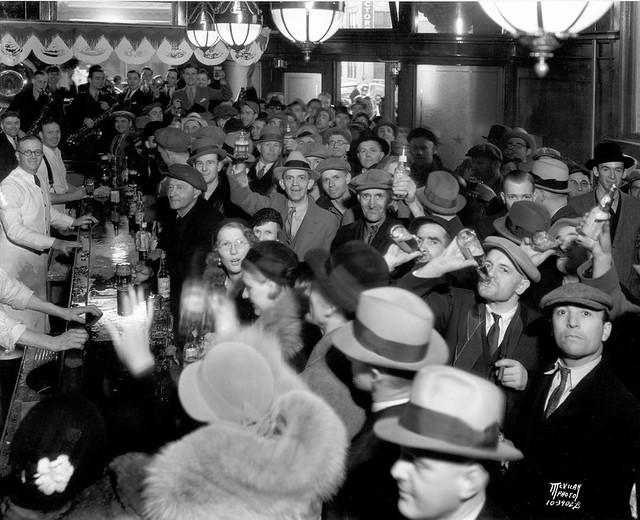
State Influence of 21st Amendment
The Twenty-first Amendment repealed Prohibition, which had been established by the Eighteenth Amendment. Prohibition aimed to curb alcohol-related social ills but proved difficult to enforce, leading to widespread defiance and the rise of organized crime. By the early 1930s, public sentiment had...
Read more →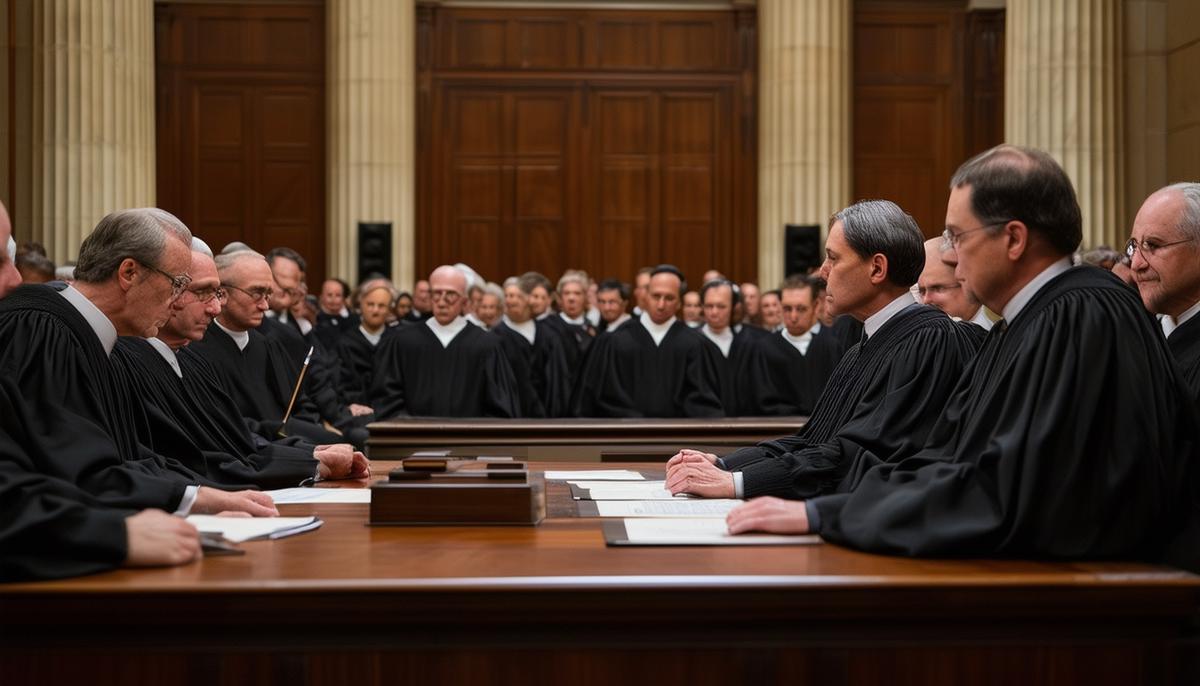
14th Amendment and Affirmative Action
The Fourteenth Amendment emerged after the Civil War to address slavery's aftermath. It granted citizenship to all born or naturalized in the U.S., countering racial discrimination. Congress passed several race-conscious laws during this period, including the 1866 Freedmen's Bureau Act, which...
Read more →
Tenth Amendment and Education
The Tenth Amendment emerged from debates between Federalists and Antifederalists in the late 1700s. Federalists argued for a strong central government, while Antifederalists feared an all-powerful authority might trample individual rights and state sovereignty. The inclusion of the Bill of Rights,...
Read more →
Second Amendment and Gun Show Loopholes
The Second Amendment states: "A well-regulated Militia, being necessary to the security of a free State, the right of the people to keep and bear Arms, shall not be infringed." In the Founders' time, militias were composed of everyday citizens ready to protect their land and family. The amendment...
Read more →