
US Constitution.co
Founding Fathers
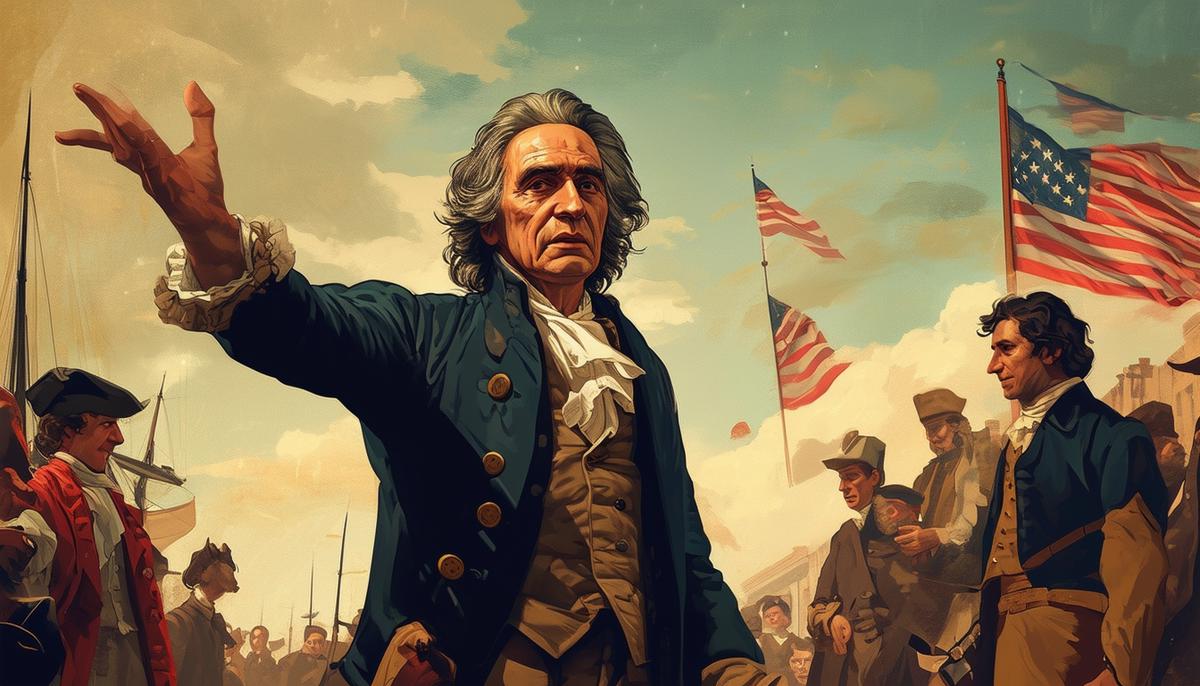
Paine's Social Welfare Advocacy
Thomas Paine went beyond politics, venturing into social welfare. In works like "Agrarian Justice," he proposed a complete plan for economic fairness. Paine believed in supporting the vulnerable - the young, elderly, and those unable to work. He suggested: Capital grants for the young Pensions for...
Read more →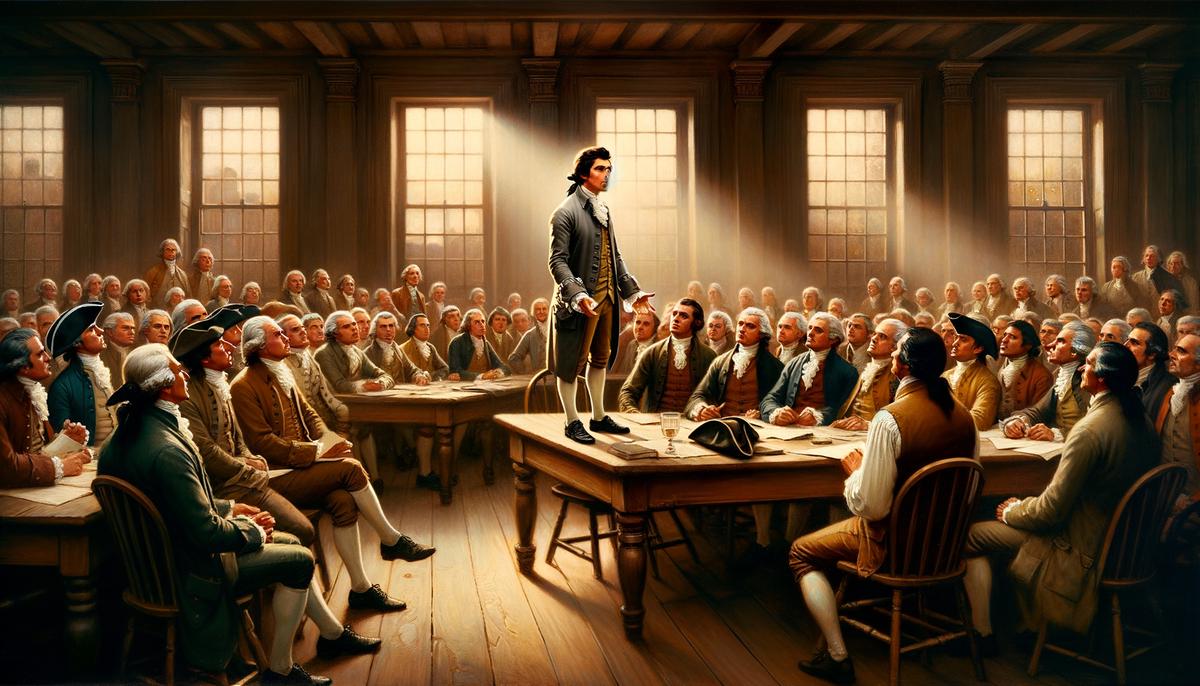
Samuel Adams & Committees
In 1772, Samuel Adams proposed the Boston Committee of Correspondence to address grievances against British rule. This committee was formed to write complaints, assert colonists' rights, and distribute these messages widely. Towns across Massachusetts were encouraged to create similar committees,...
Read more →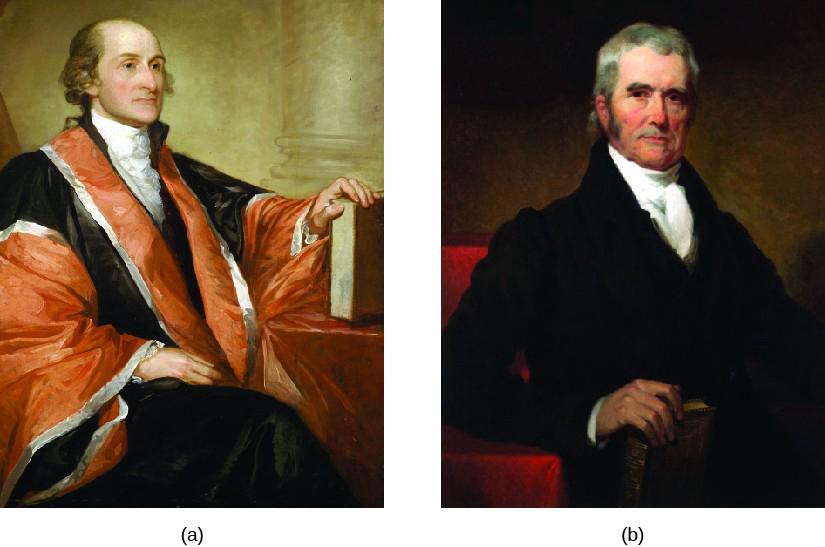
John Jay's Judiciary Role
George Washington selected John Jay as the first Chief Justice of the Supreme Court, a decision rooted in their strong relationship and Jay's extensive experience. Jay's credentials were impressive: President of the Continental Congress Key negotiator of the Treaty of Paris Co-author of some...
Read more →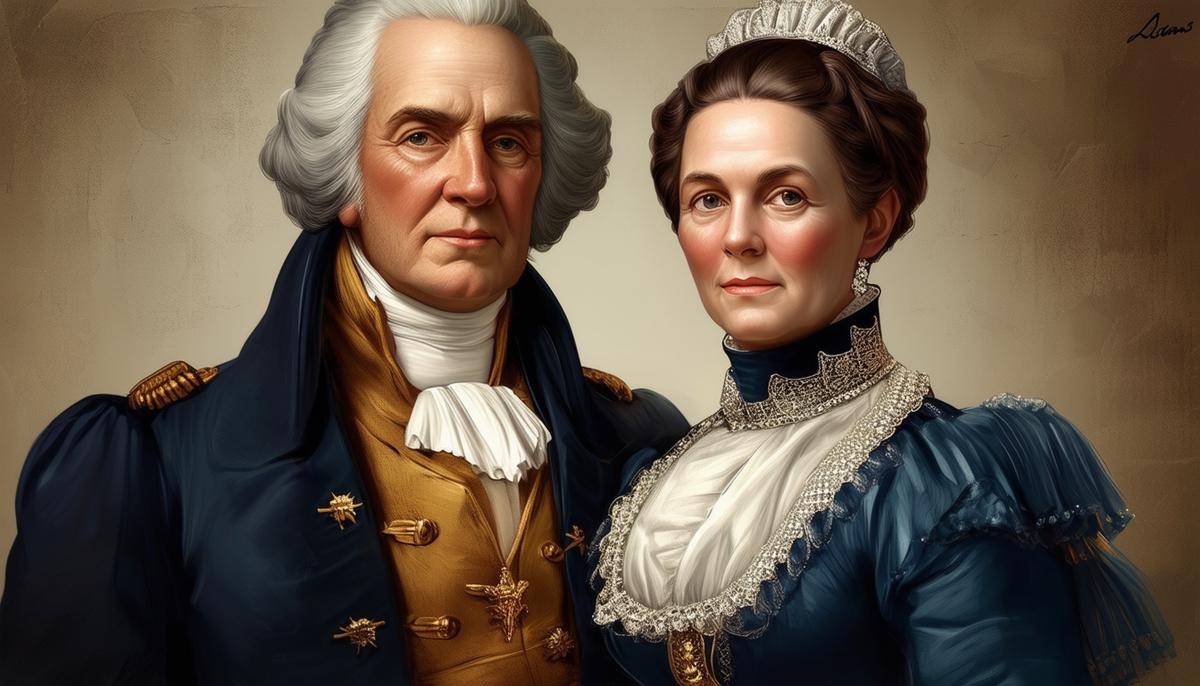
Adams' Presidential Influence
Abigail Adams was no typical First Lady of the late 18th century. Her advisory role to John Adams was crucial to his presidency. Their marriage resembled a political alliance underpinned by mutual respect and shared vision. Abigail brought insightful analysis to John's political endeavors. She was...
Read more →
Franklin's Scientific Contributions
Benjamin Franklin's iconic kite experiment explored the relationship between lightning and electricity. His groundbreaking findings, published in "Experiments and Observations on Electricity," significantly contributed to electromagnetic theory and inspired future scientists and inventors....
Read more →
Hamilton's Central Government Support
Alexander Hamilton championed a strong federal government at the 1787 Constitutional Convention. He proposed radical ideas like life-long terms for senators and a powerful executive. Though not all adopted, his impact was significant. Hamilton wrote most of the Federalist Papers , explaining why...
Read more →
Jefferson's Education Impact
Thomas Jefferson proposed a decentralized education system, favoring local community control over state or federal governance. He believed ordinary citizens could manage schools better than government officials. Jefferson advocated for public schools free from religious control, viewing education...
Read more →
Washington's Farewell Warnings
Washington's Farewell Address emphasized national unity as America's lifeline. He warned against regional divisions and political parties, seeing them as threats to national well-being. Washington argued that unity was essential for the young nation's survival and independence. He cautioned against...
Read more →
Founders' Views on Education and Civic Virtue
The Founding Fathers emphasized civic duty as essential for the republic's survival. They believed responsible citizenship, adherence to laws, and active involvement in public affairs were crucial. Education was seen as vital for creating an informed electorate capable of safeguarding liberty....
Read more →
James Wilson's Constitutional Role
James Wilson emerged as a pivotal figure at the Constitutional Convention, championing several key ideas: Advocated for a single executive , countering Virginia's proposal for a three-person executive Championed the Electoral College as an alternative to direct popular voting Proposed the...
Read more →
Samuel Adams and Sons of Liberty
The Sons of Liberty emerged from the Loyal Nine in 1765. This group of Boston patriots, including Benjamin Edes and Samuel Adams , opposed the Stamp Act which taxed paper goods. They targeted Andrew Oliver, the stamp collector, demanding his resignation. Oliver quit publicly before 2,000 people. In...
Read more →
Founding Fathers on Civic Duty
Popular sovereignty is the core of civic duty. The government serves the people's will and needs. Federalism divides power between state and national levels to prevent dominance. Separation of powers creates a system of checks and balances among Legislative, Executive, and Judicial branches. The...
Read more →
Founders' Views on Property Rights
Jefferson and Madison had philosophical backing from John Locke. Locke's concept: if you put your labor into something, it's yours . Jefferson argued protecting property was one of government's main jobs. He saw property broadly, including beliefs and opinions. Madison viewed property as broad, not...
Read more →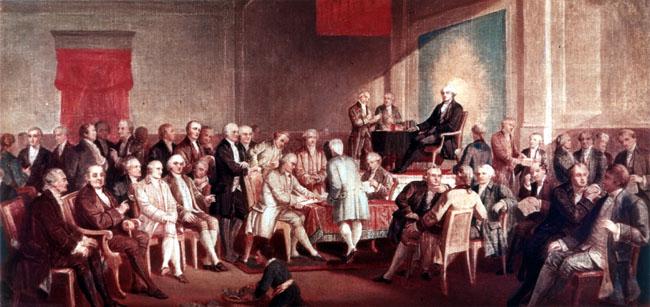
Founding Fathers' Legacy in Politics
The 1790s were about staying out of conflict between France and England. Washington's 1793 Proclamation of Neutrality aimed to avoid entanglement. This upset pro-French and pro-British factions at home. Citizen Genet tried recruiting Americans to fight Spain and take British forts. Washington...
Read more →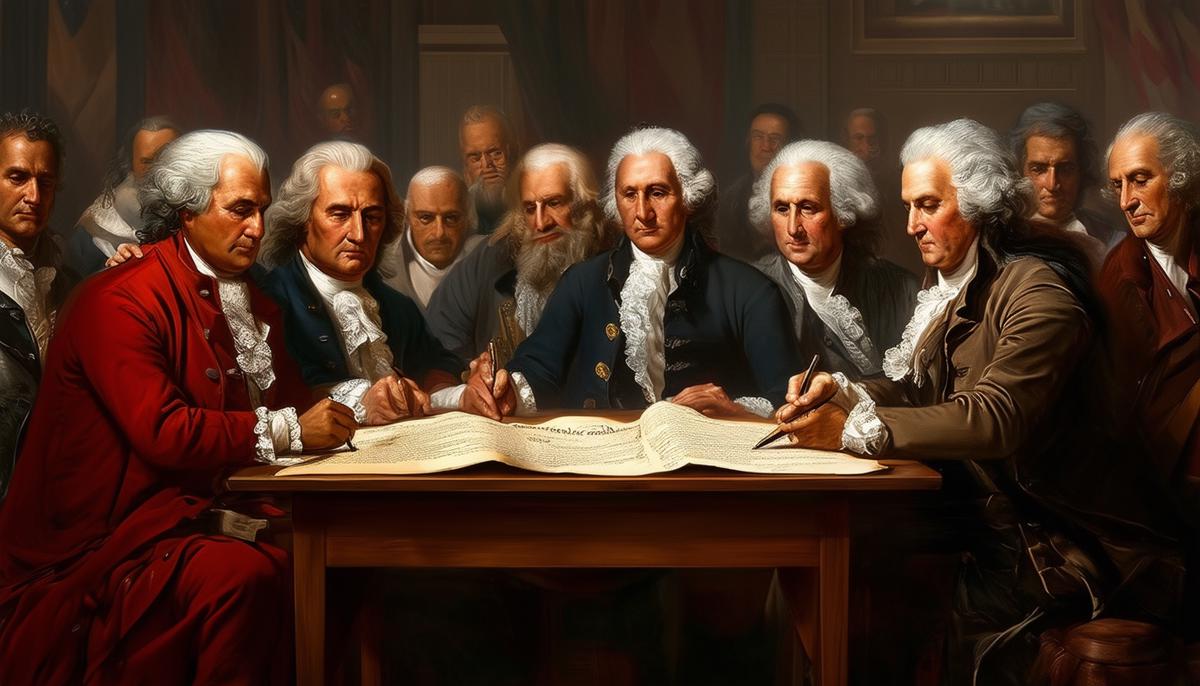
Founders' Views on Religion
The Founding Fathers held varied religious views. Some were Christian, others Deist, and a few practiced Theistic Rationalism. Several Founders, like John Jay and Patrick Henry, were Christian. Jay led the American Bible Society, while Henry distributed religious pamphlets. Samuel Adams was a...
Read more →
Gouverneur Morris and the Constitution
Gouverneur Morris, tall and peg-legged, made his mark at the Constitutional Convention. Known as the "Penman of the Constitution," he gave 173 speeches, more than any other delegate. Morris championed a strong, centralized government and the separation of powers. Morris' key contributions included:...
Read more →
Jefferson and Adams: Friendship and Rivalry
In 1775, Thomas Jefferson and John Adams met at the Continental Congress in Philadelphia. Both supported independence, but their personalities differed greatly. Jefferson was tall and refined, while Adams was short and emotional. Adams chose Jefferson to draft the Declaration of Independence,...
Read more →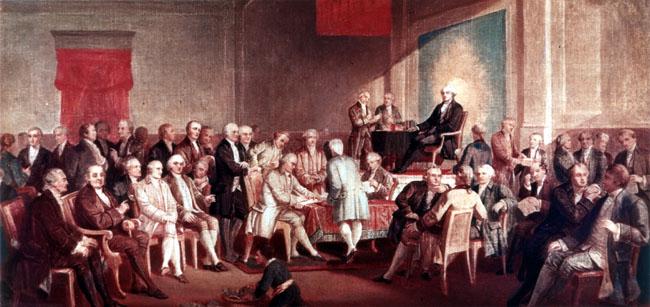
Founding Fathers' Impact on America
George Washington fought for the British in the French and Indian War before leading the Continental Army. He kept the army together through tough times like Valley Forge. In 1789, he became the first U.S. president. Alexander Hamilton rose from humble beginnings to become Washington's aide during...
Read more →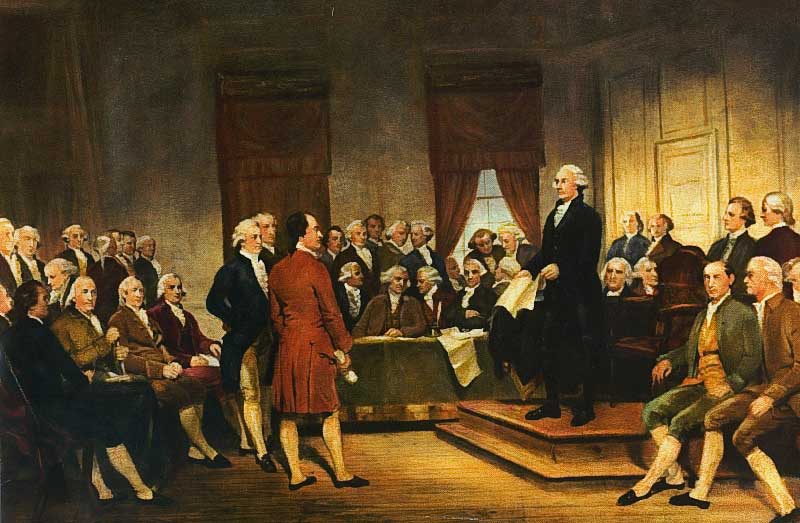
George Washington's Life and Legacy
George Washington grew up at Ferry Farm near Fredericksburg, VA. His education was sporadic until age 15, focusing on practical skills like math and surveying. He gained experience working outdoors and on farms. After his father died, Washington's half-brother Lawrence became his guardian. Through...
Read more →
Thomas Paine's Political Philosophy
Born in 1737 in Norfolk, England, Thomas Paine grew up with Quaker and Anglican influences. His formal education was brief, and he apprenticed in his father's staymaking trade. Paine's early life was marked by restlessness and adventure, including a failed attempt at sea and various jobs across...
Read more →