
US Constitution.co
US Constitution.co
The U.S. Constitution
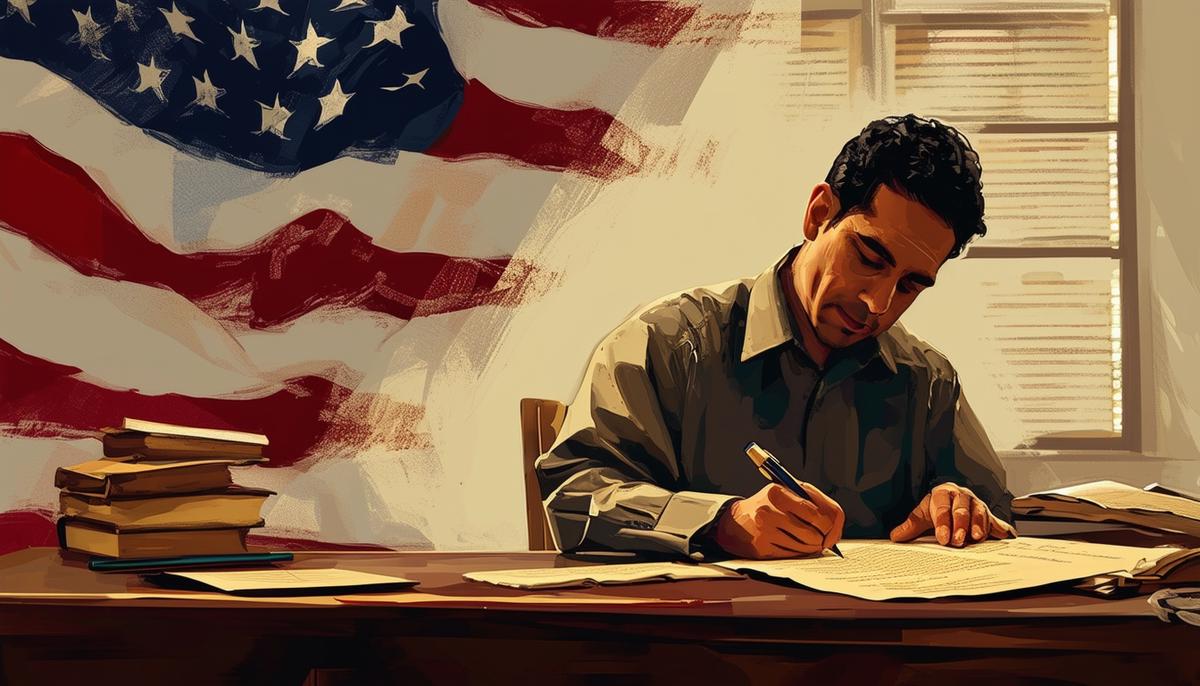
About Javier Ruiz
Javier Ruiz's journey from Austin, Texas to founding usconstitution.co showcases his dedication to constitutional principles. His blog advocates for individual liberties, limited government, and traditional values. Through commentary and community engagement, Ruiz encourages readers to understand...
Read more →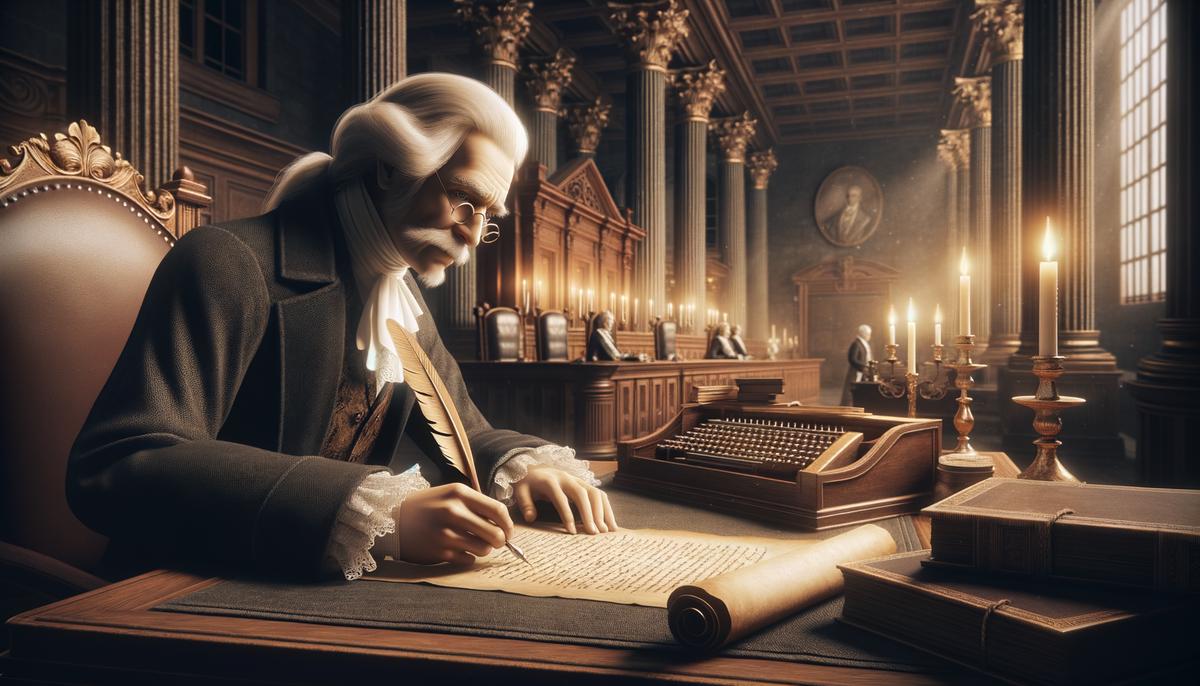
Founders' Intent for Judiciary
Judicial review found its roots in Marbury v. Madison . When John Adams appointed "midnight judges," Thomas Jefferson and James Madison weren't pleased. Madison left William Marbury's commission undelivered. Marbury sued, taking his complaint to the Supreme Court. Chief Justice John Marshall...
Read more →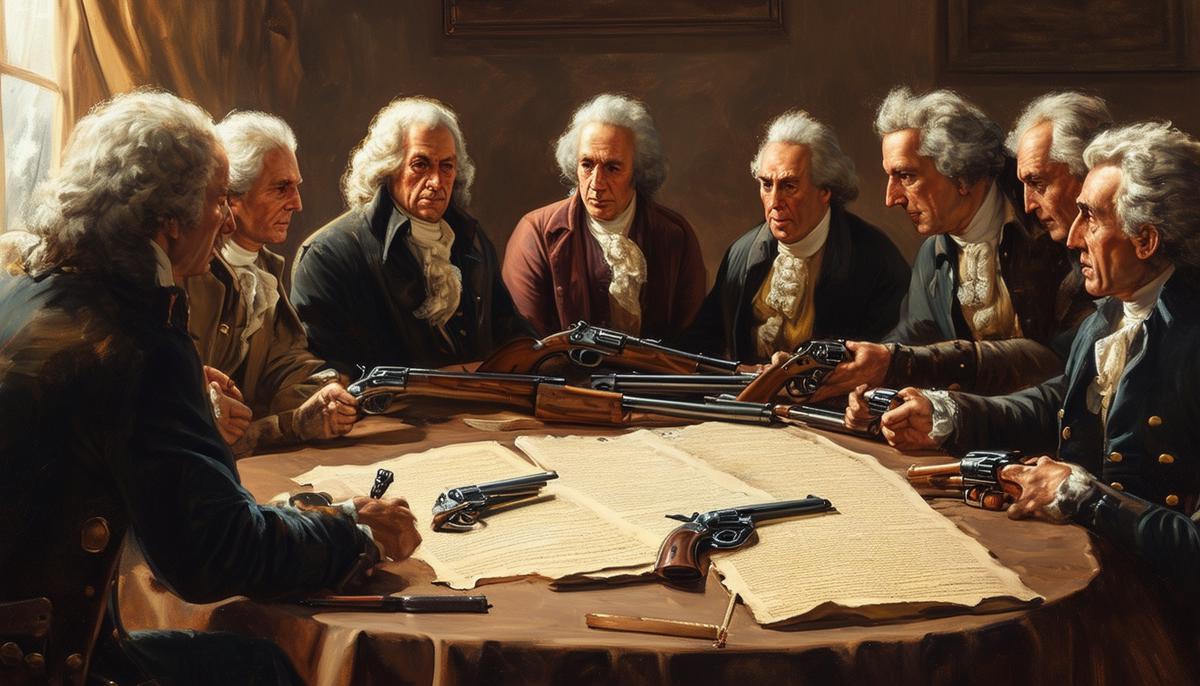
Founding Fathers' Impact on 2nd Amendment
The Founding Fathers distrusted standing armies and viewed armed citizens as the best defense against tyranny. George Mason saw militias of ordinary gun-carrying citizens as preferable to professional armies. Benjamin Franklin prioritized preserving liberty to bear arms over temporary safety....
Read more →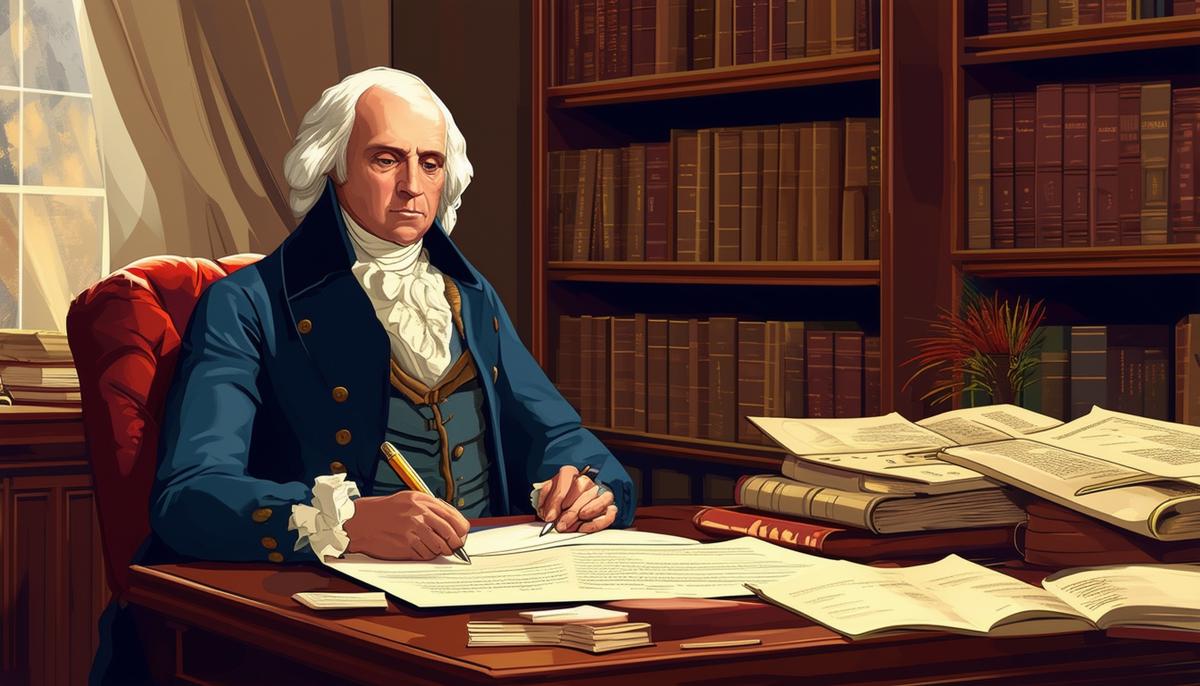
First Amendment: Freedom of Religion
The First Amendment wasn't in the original U.S. Constitution. States like New York refused to ratify without a Bill of Rights. James Madison drafted it, drawing from the Virginia Declaration of Rights . The Senate and House kept 12 of his 19 proposed amendments. The Establishment Clause and Free...
Read more →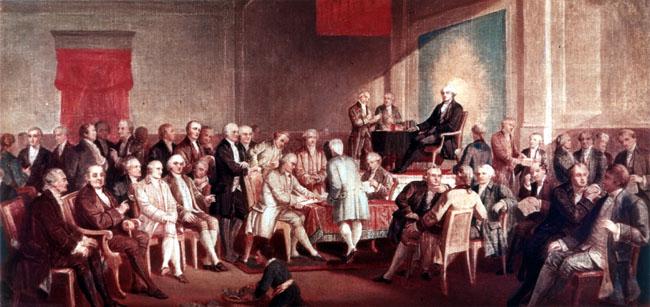
Founding Fathers' Legacy in Politics
The 1790s were about staying out of conflict between France and England. Washington's 1793 Proclamation of Neutrality aimed to avoid entanglement. This upset pro-French and pro-British factions at home. Citizen Genet tried recruiting Americans to fight Spain and take British forts. Washington...
Read more →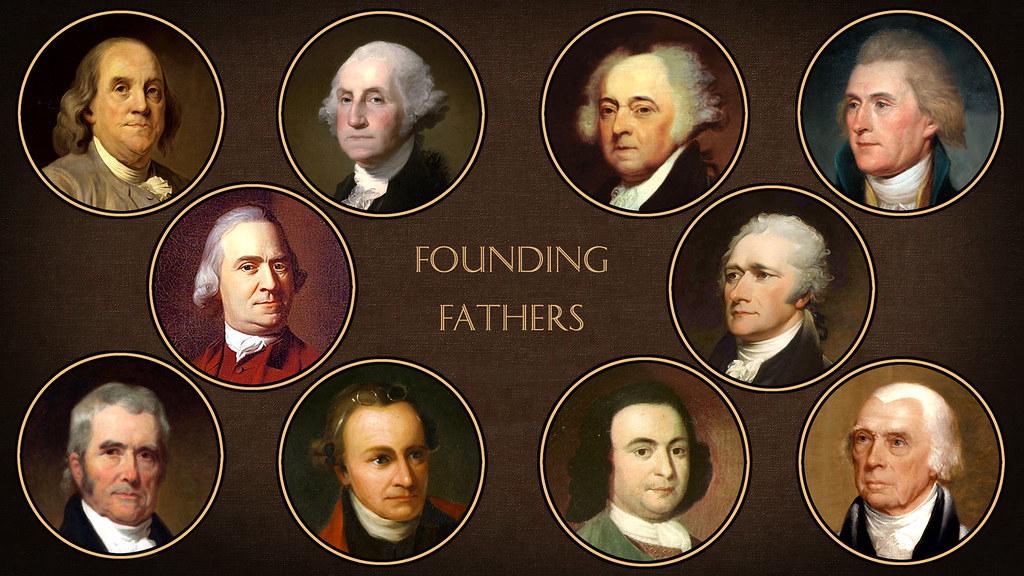
Incorporation of Bill of Rights
The Bill of Rights, crafted in 1791, aimed to protect individuals from federal government power. Initially, these protections didn't extend to the states. Congress rejected proposals to apply these rights to the states, preferring to let states handle their own affairs. In 1833, the Supreme Court's...
Read more →
Founders' Views on Religion
The Founding Fathers held varied religious views. Some were Christian, others Deist, and a few practiced Theistic Rationalism. Several Founders, like John Jay and Patrick Henry, were Christian. Jay led the American Bible Society, while Henry distributed religious pamphlets. Samuel Adams was a...
Read more →
Founders' Vision of Checks and Balances
Ancient Rome and Greece influenced our government structure. Polybius noticed the Roman Republic's three branches: Monarchy, Aristocracy, and Democracy , resembling our checks and balances system. During the Enlightenment, Montesquieu's " The Spirit of the Laws " proposed dividing government powers...
Read more →
Bill of Rights Influences Liberties
The Bill of Rights, one of the three cornerstone documents of the United States, traces its roots back to various other influential pieces including the Virginia Declaration of Rights, the Magna Carta, and the English Bill of Rights. The amendments within the Bill of Rights offer a mosaic of...
Read more →
Gouverneur Morris and the Constitution
Gouverneur Morris, tall and peg-legged, made his mark at the Constitutional Convention. Known as the "Penman of the Constitution," he gave 173 speeches, more than any other delegate. Morris championed a strong, centralized government and the separation of powers. Morris' key contributions included:...
Read more →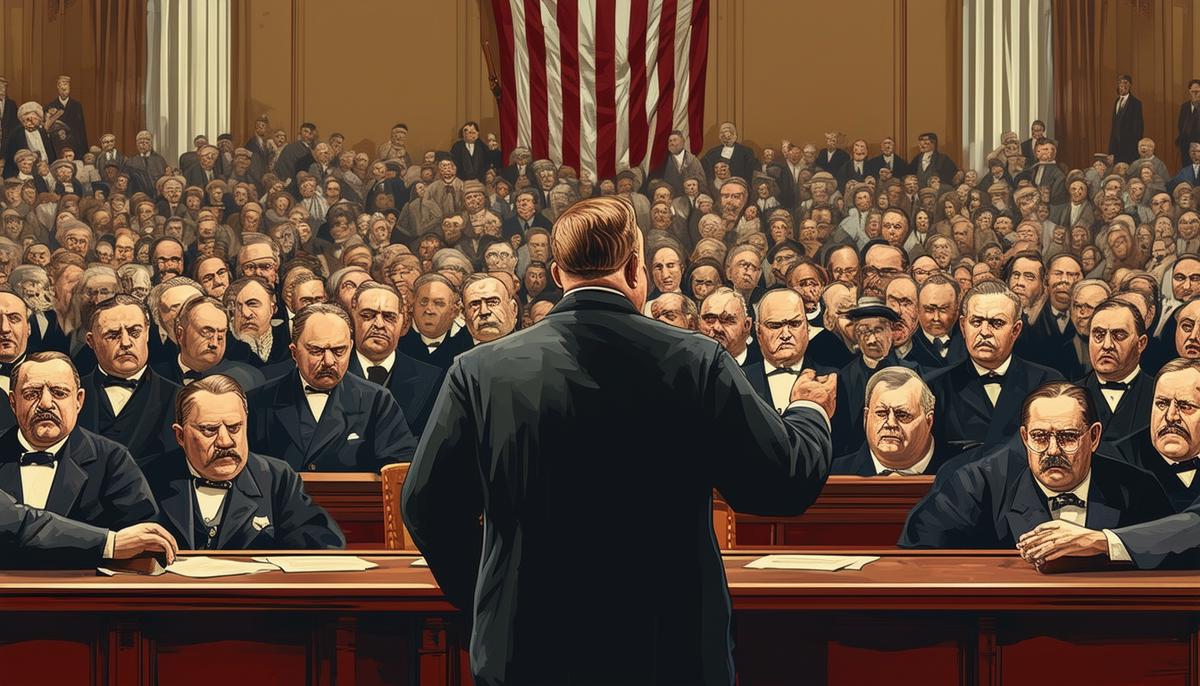
Impact of the 16th Amendment
Congress faced a roadblock in imposing a nationwide income tax after the Supreme Court's 1895 Pollock v. Farmers' Loan & Trust Co. decision. The Court labeled it a direct tax requiring proportional distribution among states, jeopardizing national solvency. During the Progressive Era, reformists...
Read more →
Jefferson and Adams: Friendship and Rivalry
In 1775, Thomas Jefferson and John Adams met at the Continental Congress in Philadelphia. Both supported independence, but their personalities differed greatly. Jefferson was tall and refined, while Adams was short and emotional. Adams chose Jefferson to draft the Declaration of Independence,...
Read more →
Bill of Rights and Gun Control
The Second Amendment has roots in the Founding Fathers' concerns about a strong central government. Its intent was to keep people armed against potential federal tyranny and government overreach. The late 18th century saw debates between Federalists , who favored a stronger central government, and...
Read more →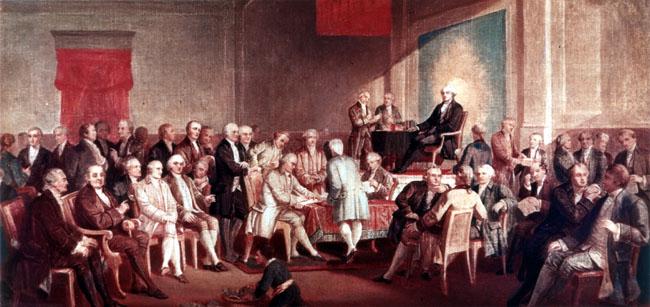
Founding Fathers' Impact on America
George Washington fought for the British in the French and Indian War before leading the Continental Army. He kept the army together through tough times like Valley Forge. In 1789, he became the first U.S. president. Alexander Hamilton rose from humble beginnings to become Washington's aide during...
Read more →
Bill of Rights in Criminal Justice
The Fourth Amendment guards against unreasonable searches and seizures. It requires warrants and probable cause for law enforcement actions. This applies to physical searches, digital surveillance, and traffic stops. The exclusionary rule , stemming from the Fourth Amendment, prevents illegally...
Read more →
Originalism vs. Living Constitution
Marbury v. Madison in 1803 established the Supreme Court's power to review federal actions. This power expanded to state actions too. The Court must interpret the Constitution. The Second Amendment's 27 words sparked debate until 2008 when the Court ruled it covers individual gun ownership. The...
Read more →
George Washington's Life and Legacy
George Washington grew up at Ferry Farm near Fredericksburg, VA. His education was sporadic until age 15, focusing on practical skills like math and surveying. He gained experience working outdoors and on farms. After his father died, Washington's half-brother Lawrence became his guardian. Through...
Read more →
Eighth Amendment Interpretations
The Eighth Amendment's roots trace back to the English Bill of Rights, 1689 . It aimed to stop harsh justice and outdated punishments. George Mason referenced this in Virginia's Declaration of Rights in 1776. The amendment's core was clear— no barbaric methods . Early America feared a Congress with...
Read more →
Thomas Paine's Political Philosophy
Born in 1737 in Norfolk, England, Thomas Paine grew up with Quaker and Anglican influences. His formal education was brief, and he apprenticed in his father's staymaking trade. Paine's early life was marked by restlessness and adventure, including a failed attempt at sea and various jobs across...
Read more →
Legal Challenges of the 25th Amendment
The 25th Amendment arose from gaps in the original Constitution regarding presidential succession. Presidents like James Garfield and Woodrow Wilson , incapacitated while in office, exposed these weaknesses. Eisenhower's health issues and Kennedy's assassination finally spurred action. The...
Read more →