
US Constitution.co
Constitutional Topics

Commerce and Taxation Debates
The Articles of Confederation had major flaws: Ineffective taxation: Congress couldn't tax directly, only asking states for money. This left the national treasury empty, with Revolutionary War debts unpaid. Commerce regulation: Regulating interstate and international commerce was impossible. States...
Read more →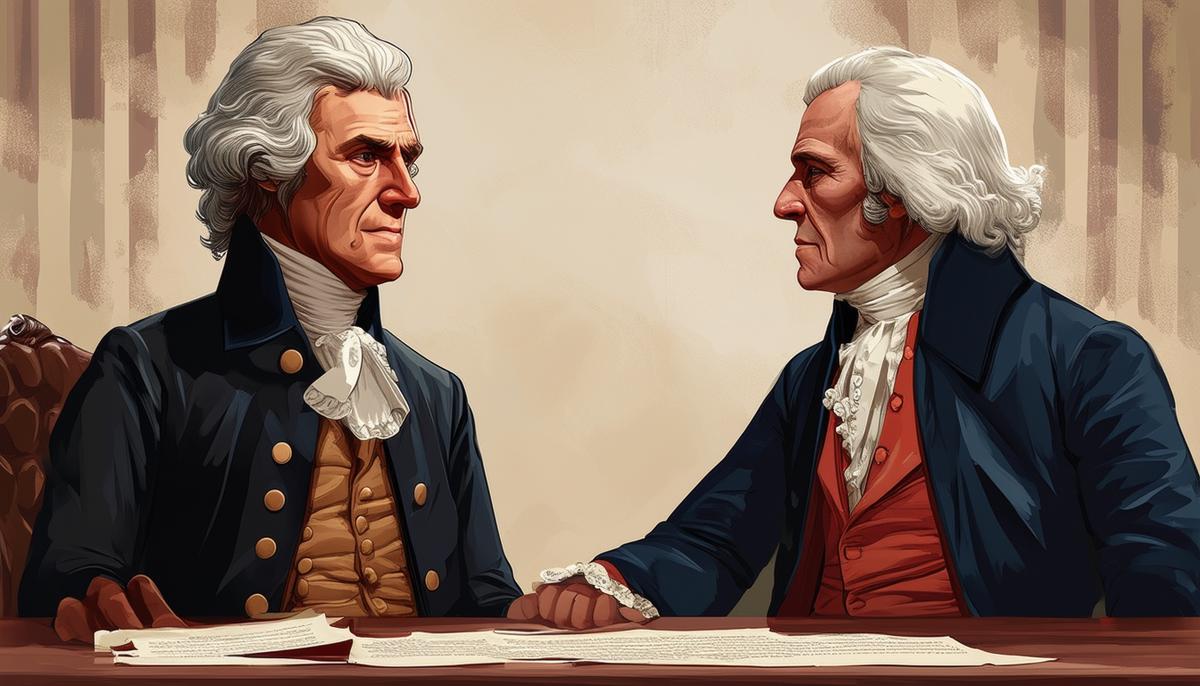
Tenth Amendment Powers
The Tenth Amendment stemmed from concerns about federal overreach. When the Constitution was introduced in 1787, it lacked a Bill of Rights. Antifederalists like Jefferson and Madison worried about potential federal intrusion into state matters. They demanded explicit protections for personal...
Read more →
Free Speech Rights on Campuses
Public universities must follow First Amendment protections, allowing students to express thoughts without censorship. This covers: Speech Writing Symbolic actions (e.g., clothing or protests) Restrictions are minimal, mainly to prevent major disruptions. Private universities create their own...
Read more →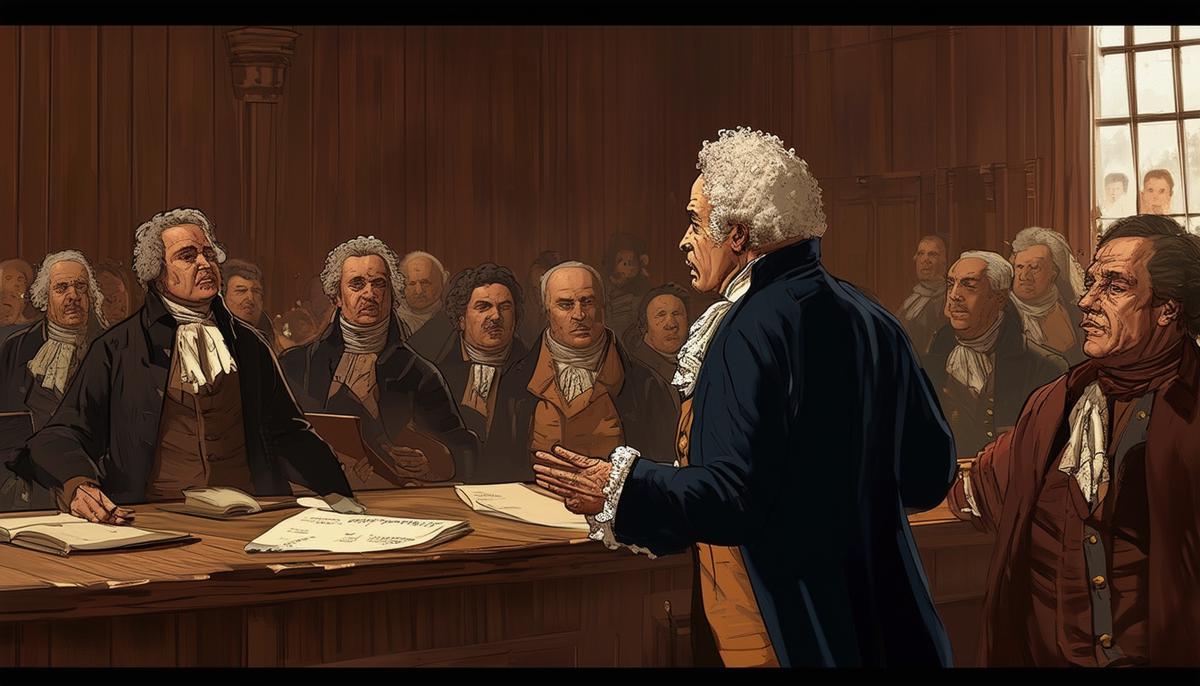
Fourth Amendment Search and Seizure
The Fourth Amendment's roots trace back to 17th century England with Saman's Case , which recognized the right to defend one's home against unlawful intrusion. Entick v. Carrington in the 1700s further cemented privacy rights against government overreach by ruling against general warrants. American...
Read more →
Tenth Amendment and Nullification
The Tenth Amendment has roots in the American Revolution and its aftermath. James Madison and Thomas Jefferson championed limiting federal power and preserving state authority. These ideas shaped America's constitutional framework. The Founding Fathers created a new national government at the...
Read more →
Modern Constitutional Amendments
The Articles of Confederation proved ineffective, with states holding most power and Congress lacking funding abilities. The 1787 Philadelphia Convention aimed to create a stronger yet balanced national government. The Great Compromise established a bicameral legislature, with the House reflecting...
Read more →
Founders' Intent for Judiciary
Judicial review found its roots in Marbury v. Madison . When John Adams appointed "midnight judges," Thomas Jefferson and James Madison weren't pleased. Madison left William Marbury's commission undelivered. Marbury sued, taking his complaint to the Supreme Court. Chief Justice John Marshall...
Read more →
Founding Fathers' Impact on 2nd Amendment
The Founding Fathers distrusted standing armies and viewed armed citizens as the best defense against tyranny. George Mason saw militias of ordinary gun-carrying citizens as preferable to professional armies. Benjamin Franklin prioritized preserving liberty to bear arms over temporary safety....
Read more →
First Amendment: Freedom of Religion
The First Amendment wasn't in the original U.S. Constitution. States like New York refused to ratify without a Bill of Rights. James Madison drafted it, drawing from the Virginia Declaration of Rights . The Senate and House kept 12 of his 19 proposed amendments. The Establishment Clause and Free...
Read more →
Incorporation of Bill of Rights
The Bill of Rights, crafted in 1791, aimed to protect individuals from federal government power. Initially, these protections didn't extend to the states. Congress rejected proposals to apply these rights to the states, preferring to let states handle their own affairs. In 1833, the Supreme Court's...
Read more →
Founders' Vision of Checks and Balances
Ancient Rome and Greece influenced our government structure. Polybius noticed the Roman Republic's three branches: Monarchy, Aristocracy, and Democracy , resembling our checks and balances system. During the Enlightenment, Montesquieu's " The Spirit of the Laws " proposed dividing government powers...
Read more →
Impact of the 16th Amendment
Congress faced a roadblock in imposing a nationwide income tax after the Supreme Court's 1895 Pollock v. Farmers' Loan & Trust Co. decision. The Court labeled it a direct tax requiring proportional distribution among states, jeopardizing national solvency. During the Progressive Era, reformists...
Read more →
Bill of Rights and Gun Control
The Second Amendment has roots in the Founding Fathers' concerns about a strong central government. Its intent was to keep people armed against potential federal tyranny and government overreach. The late 18th century saw debates between Federalists , who favored a stronger central government, and...
Read more →
Bill of Rights in Criminal Justice
The Fourth Amendment guards against unreasonable searches and seizures. It requires warrants and probable cause for law enforcement actions. This applies to physical searches, digital surveillance, and traffic stops. The exclusionary rule , stemming from the Fourth Amendment, prevents illegally...
Read more →
Originalism vs. Living Constitution
Marbury v. Madison in 1803 established the Supreme Court's power to review federal actions. This power expanded to state actions too. The Court must interpret the Constitution. The Second Amendment's 27 words sparked debate until 2008 when the Court ruled it covers individual gun ownership. The...
Read more →
Eighth Amendment Interpretations
The Eighth Amendment's roots trace back to the English Bill of Rights, 1689 . It aimed to stop harsh justice and outdated punishments. George Mason referenced this in Virginia's Declaration of Rights in 1776. The amendment's core was clear— no barbaric methods . Early America feared a Congress with...
Read more →
Twelfth Amendment and Electoral College
The Constitutional Convention faced a challenge in deciding how to elect a president. Some favored Congressional selection, others a popular vote. The Committee on Unfinished Parts proposed the Electoral College as a compromise. States received electors equal to their total Senators and...
Read more →
Hamilton's National Bank
Hamilton's grasp of finance stemmed from real-world necessity. He grasped commerce's intricacies while working as General Washington's aide-de-camp during the Revolutionary War. In 1790, as Secretary of the Treasury, Hamilton presented his vision to Congress. The U.S. was in post-war debt with...
Read more →
Second Amendment Rights
The Second Amendment was crafted in the late 1780s against a backdrop of revolution and anti-tyranny sentiment. The founders tied the right to bear arms to militia service and community defense. The Pennsylvania Constitution melded the right to bear arms with the duty of defense. James Madison's...
Read more →
Impact of 14th Amendment on Equal Protection
After the Civil War, the Thirteenth Amendment abolished slavery, but former slaves' rights remained unclear. The Fourteenth Amendment promised citizenship to "all persons born or naturalized in the United States." Congressman John A. Bingham envisioned this amendment as a safeguard against states...
Read more →